


PLYODYNE® FAQ
Clear answers
Defined
boundaries
Practical information about the system, its mechanics, configurations, professional context and current evidence position.
PRODUCT ORIENTATION
Which PlyoDyne® system are you looking for?
ON THIS PAGE
01 — System & movement 02 — Products & configuration 03 — Professional use & evidence 04 — Purchase, installation & support01
System & movement
What is PlyoDyne®?
PlyoDyne is a technically defined movement-training platform. The user creates the movement while the system provides adjustable mechanical conditions for direction, range and inertial resistance.
Does PlyoDyne guide one fixed movement path?
No. The handle travels along the straight shaft, while the shaft can change direction through the flexible joint and rotate through its bearing. The available movement is therefore not reduced to one predefined machine path.
Why can the handle not rotate freely around the shaft?
A groove keys the handle to the shaft. This means the handle and shaft rotate together through the bearing at the shaft base—an intentional part of the mechanical design.
What are the three sources of inertial resistance?
They are the inherent inertia of the shaft-and-handle assembly, inertia created by added mass, and rotational inertia when the keyed shaft-and-handle assembly rotates.
02
Products & configuration
What is included in a PlyoDyne® system?
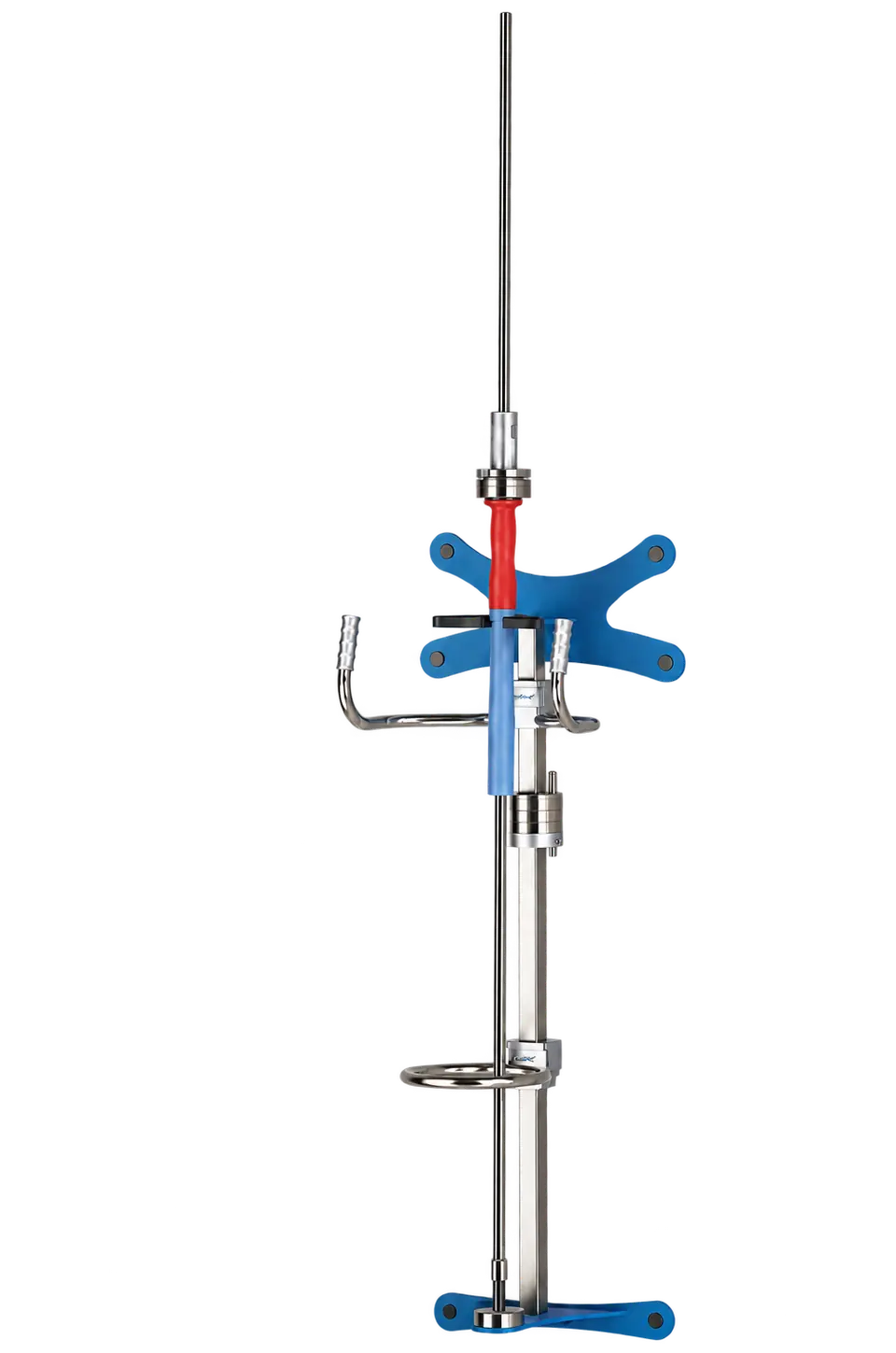
Every system contains the same core movement components. First choose the installation—PRO ONE or PRO WALL—then choose the handle configuration—S or M. This creates four possible combinations: ONE S, ONE M, WALL S and WALL M.
PRO ONE SHOWN · SHARED FUNCTIONAL COMPONENTS


Only the supporting structure and installation method change: the floor-standing structure is replaced by the wall-mounted interface.
CHOOSE THE HANDLE CONFIGURATION
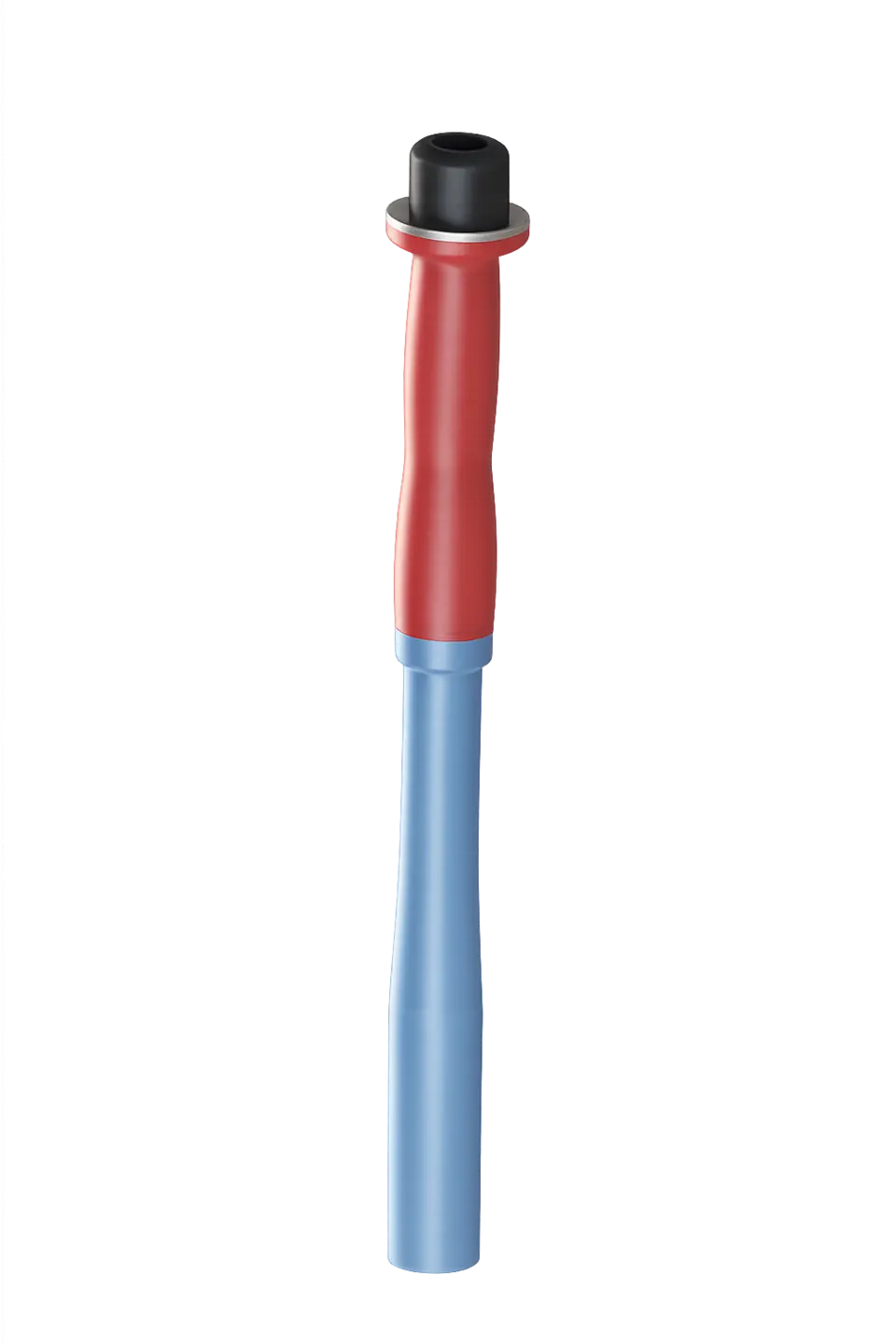
Weighted handle
Complete weighted handle with retaining clamp and the full 4.975 kg weight set.
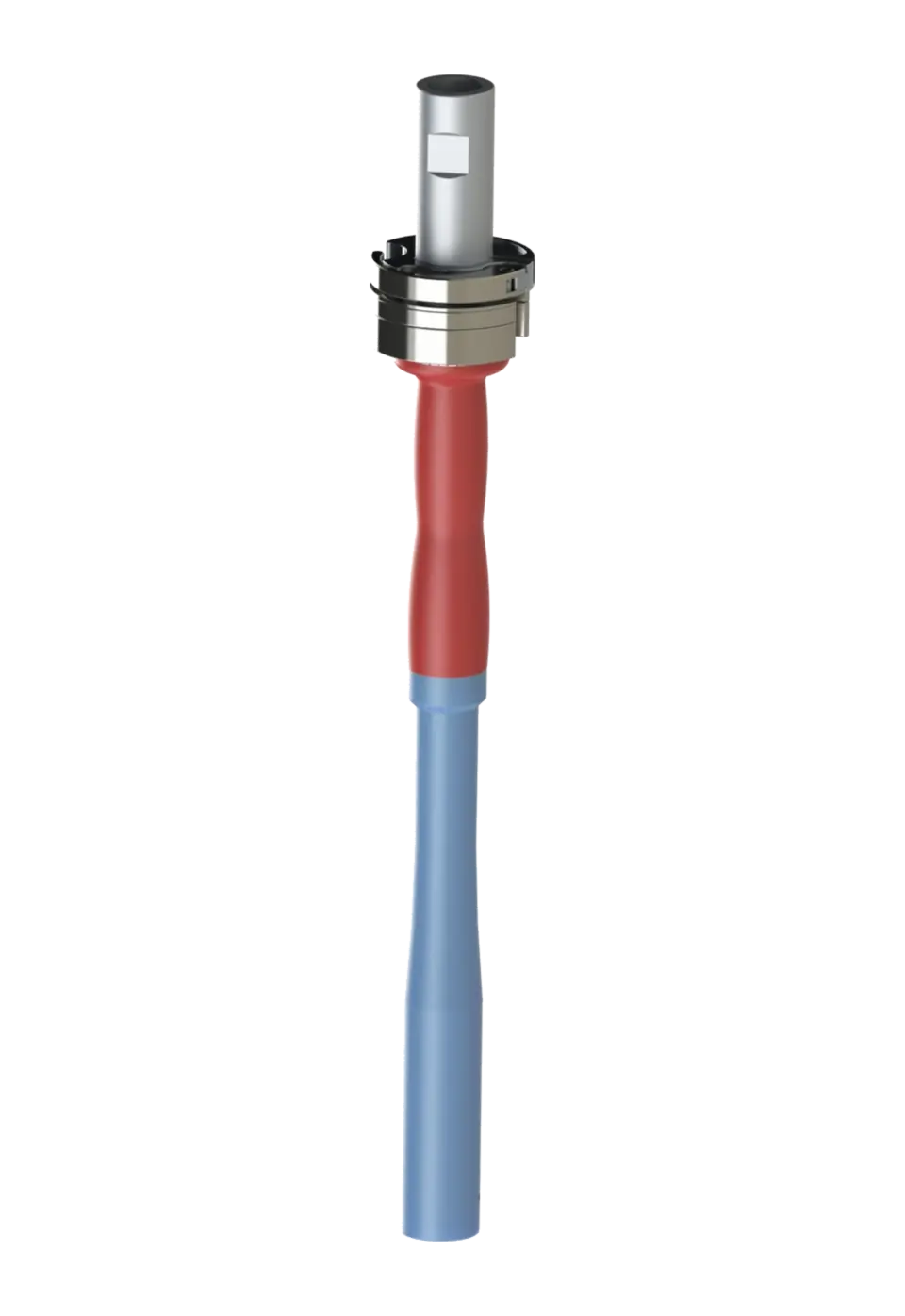
Weighted + lightweight
Everything included in S, plus the additional lightweight handle and 1.9 kg lightweight hollow aluminium shaft.
COMPLETE DELIVERY SCOPE
| Component | PRO ONE | PRO WALL |
|---|---|---|
| Stable supporting structure | Freestanding | Wall-mounted |
| Weight-storage facility | Included | Included |
| Flexible joint and rotation bearing | Included | Included |
| Passive safety handle holder | Included | Included |
| Exercise shaft, Ø25 mm | Included | Included |
| Axial movement extender | Included | Included |
| Range Control Ring | Included | Included |
| Support handles | 1 set | 1 set |
| Complete handle assembly | S or M | S or M |
| Complete weight set | 11 weights · 4.975 kg | 11 weights · 4.975 kg |
What is the difference between PRO ONE and PRO WALL?
PRO ONE is a self-supporting, floor-standing system that does not require permanent wall fixing. PRO WALL uses the same core movement mechanics in a wall-mounted format. Both require a suitable installation location and sufficient clear operating space.
What is the difference between the S and M configurations?
The S configuration includes the standard exercise shaft, weighted handle and complete removable weight set. The M configuration includes everything in S, plus the lightweight handle and lightweight hollow aluminium exercise shaft (2,410 mm × Ø25 mm · 1.9 kg). Exact configuration details should be confirmed for the intended installation.
Which weights are supplied?
The supplied added-weight set totals 4.975 kg and consists of 1 × 25 g, 1 × 50 g, 4 × 100 g, 1 × 0.5 kg and 4 × 1 kg. Combinations therefore begin at 25 g and allow controlled changes in added mass. The complete 4.975 kg supplied set is the maximum approved added weight. Use only the supplied or iQQuip-approved weights; do not add improvised or third-party weights.
What can be adjusted vertically?
The Range Control Ring itself and the support-handle assembly can each be moved independently up or down and locked at the selected height. Their positions can therefore be adapted to the user’s body dimensions, starting position and intended exercise.
How do I reposition the Range Control Ring and support handles?
Support the component, release its height-adjustment clamp, move it vertically to the required position and close the clamp completely. Confirm that it is firmly secured before use. Watch the demonstration →
How is the training handle secured when it is not in use?
During training, the handle slides freely along the shaft. When it is not in use, lift it into the Passive Safety Holder. The holder keeps the handle securely parked and helps prevent unintended downward movement. Before resuming training, lift the handle out of the holder and confirm that it travels freely. Watch the demonstration →
How do I add or remove weights from the weighted handle?
Open the retaining clamp, slide it all the way up and close it in that position. Insert a weight through the loading slot in the weighted handle and let it slide all the way down. Open the clamp again, lower it directly onto the installed weight or weight stack and close it firmly. Before use, check that the clamp is fully closed and all weights are securely retained. Read the full instructions →
What does the Range Control Ring do?
The Range Control Ring itself moves vertically along the support and locks at the selected height. Its position determines whether shaft tilt remains free, is limited around the flexible joint or is supported when the shaft rests against the ring. The ring does not limit the training handle’s travel along the shaft. It is an adjustable mechanical boundary, not a guarantee that a movement is suitable or safe for a particular person.
03
Professional use & evidence
Who is PlyoDyne intended for?
The platform is being developed for professional movement-training, rehabilitation-related exploration and independent research. Assessment, exercise selection and supervision remain the responsibility of an appropriately qualified professional.
Is PlyoDyne a medical device?
No. PlyoDyne is currently presented as professional movement-training and research equipment, not as a CE-marked medical device.
Does iQQuip claim that PlyoDyne treats pain or a medical condition?
No. The mechanics and adjustable variables can be described precisely, but clinical effectiveness has not been established. The website does not diagnose, prescribe treatment or promise an outcome.
Can researchers work with iQQuip?
Yes. iQQuip welcomes well-defined research questions concerning movement behaviour, mechanical variables, measurement methods, usability and potential applications of the platform.
04
Purchase, installation & support
Can I order PlyoDyne online?
Not at present. iQQuip first discusses the intended professional setting, installation format and configuration before preparing a proposal.
How much space is required for PlyoDyne®?
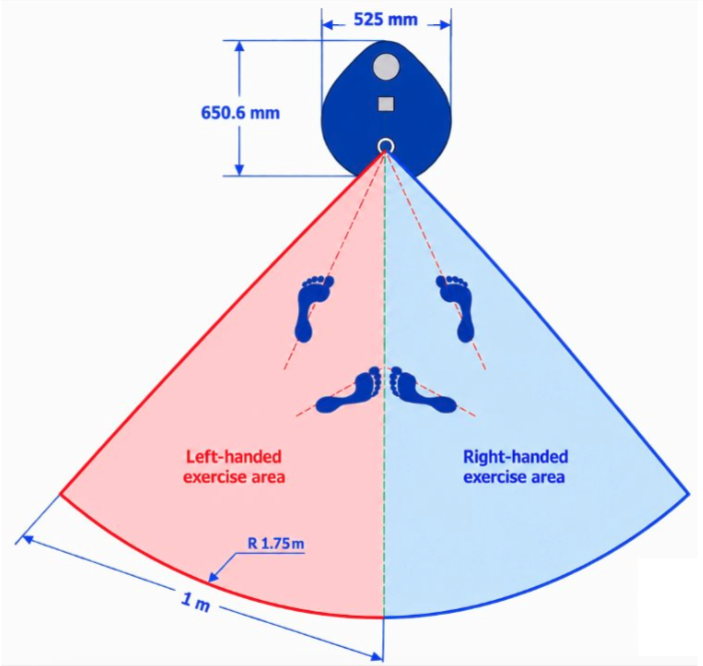
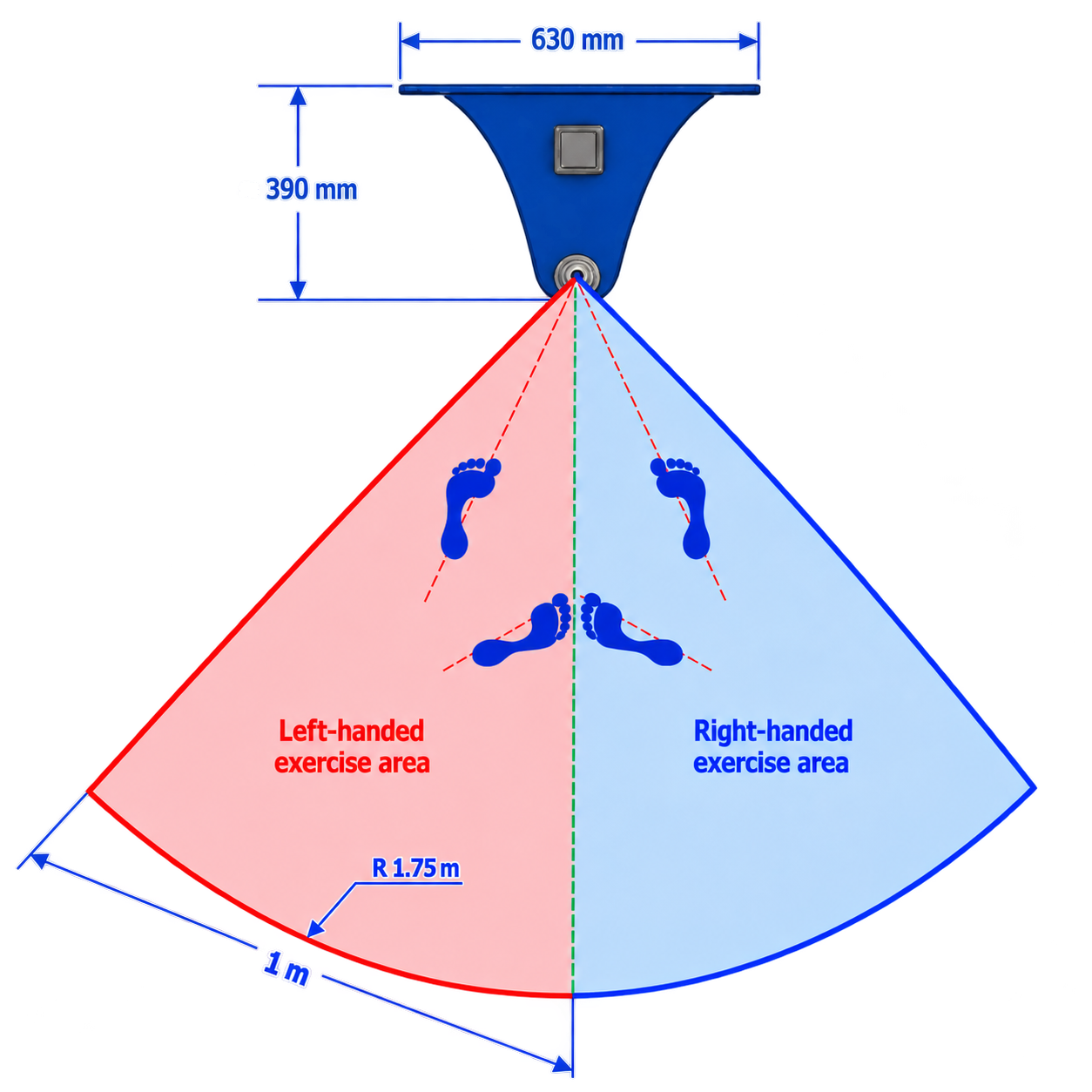
For room planning, allow approximately 2.0 × 2.40 m of clear floor space for either PRO ONE or PRO WALL. The exercise radius is 1.75 m from the shaft pivot point and the minimum ceiling height is 2.50 m.
The illustrated left- and right-handed exercise areas may overlap depending on the exercise and user position. They should not be interpreted as two separate areas that must be added together. Two-handed exercise remains within the same overall operating area.
PRO ONE has a base plate of 525 × 650.6 mm. PRO WALL is 630 mm wide, projects 390 mm from the wall to the base-plate tip, and its joint centre is 380 mm from the wall. Allow additional clearance for the user, circulation and surrounding objects.
What should I do if the ceiling height is limited?
The standard minimum ceiling height for PlyoDyne® PRO ONE and PRO WALL is 2.50 m.
For rooms with a lower ceiling, please contact iQQuip before ordering or installation. We will assess the available height and advise whether a suitable product configuration can be provided.
Do not shorten, cut, drill or otherwise modify the exercise shaft yourself.
What wall is required for PlyoDyne® PRO WALL?
PRO WALL is intended for a suitable load-bearing brick, concrete or equivalent wall. It uses six wall-fixing positions and is supplied with plugs and screws selected for the intended purpose. A competent installer must confirm that the wall and supplied fixings are suitable for the actual installation before use.
Can PlyoDyne be used outdoors?
No. PlyoDyne is intended for indoor use under normal room conditions. Avoid direct sunlight, installation close to a heater, persistent high humidity, condensation and wet environments. Some high-grade polymer components can absorb moisture, which may alter their behaviour and cause malfunction.
How often should PlyoDyne be inspected?
Carry out a brief visual and functional check before every training session. A more detailed inspection is recommended every three months. Inspect the system immediately after an impact, unusual movement, wall-fixing movement or any suspected damage.
Can a private individual use PlyoDyne?
A private enquiry is welcome, but iQQuip cannot determine individual suitability or provide medical advice. Questions about pain, symptoms or exercise suitability should be discussed with a qualified healthcare professional.
How can I request more information?
Use the Contact page and choose the product, professional, research or partnership route. Please do not include medical records or identifiable patient information.
YOUR QUESTION IS NOT LISTED?
Start a direct conversation.
Tell us whether your question concerns a product, professional application, research, partnership or another subject.
Contact iQQuipPRODUCT BROCHURE
Download the PlyoDyne® PRO brochure.
Download the product overview for specifications, S and M configurations, installation, delivery and maintenance information.