Movement training can be approached in many ways. The objective may be to develop mobility, coordination, stability, power, speed, elasticity or endurance — or simply to explore how the body responds to different movement tasks.
iQQuip® approaches exercise through controlled and configurable movement. With PlyoDyne®, variables such as movement direction, range, speed, support and inertia can be adjusted so that an exercise can be repeated, observed and progressively changed.
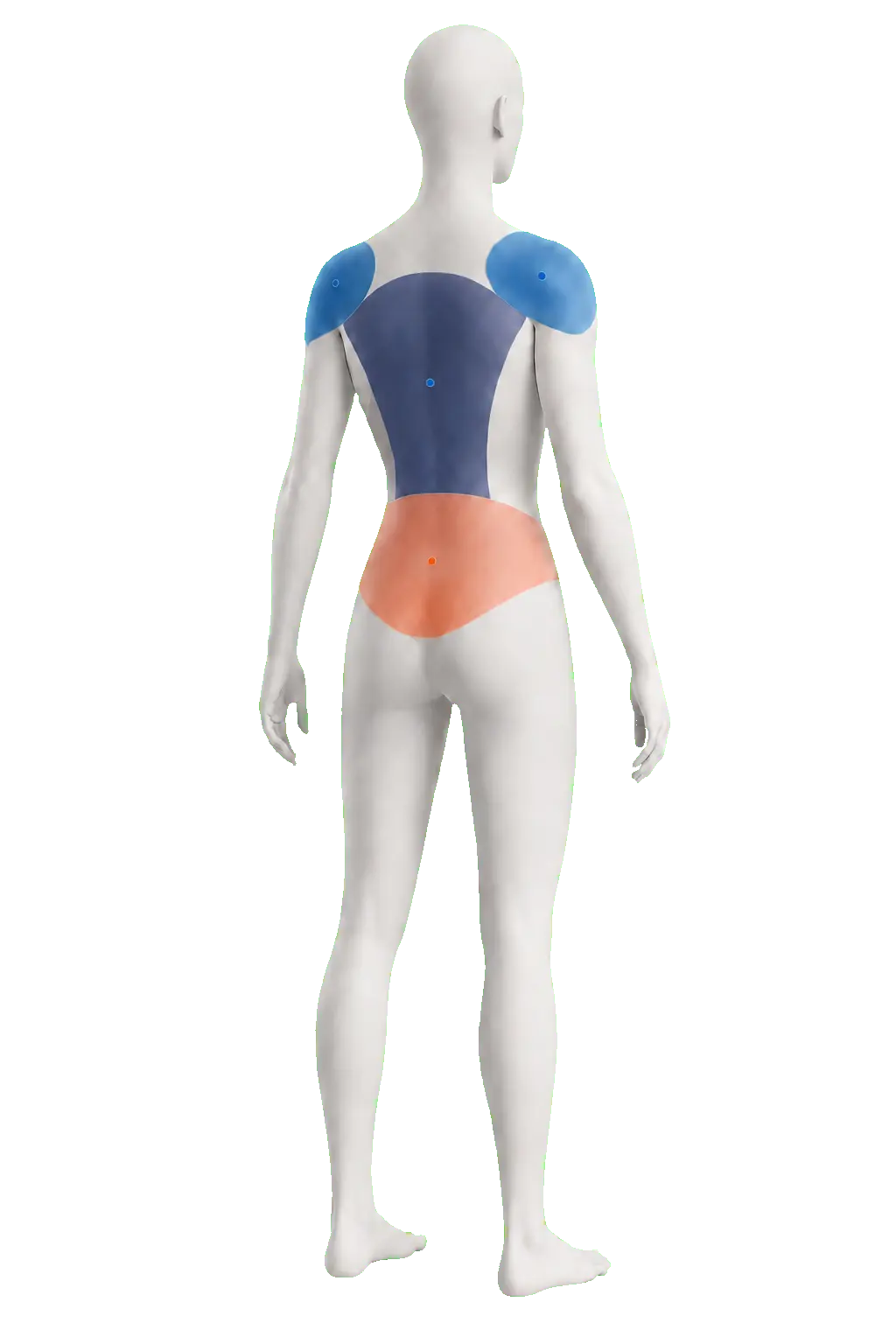
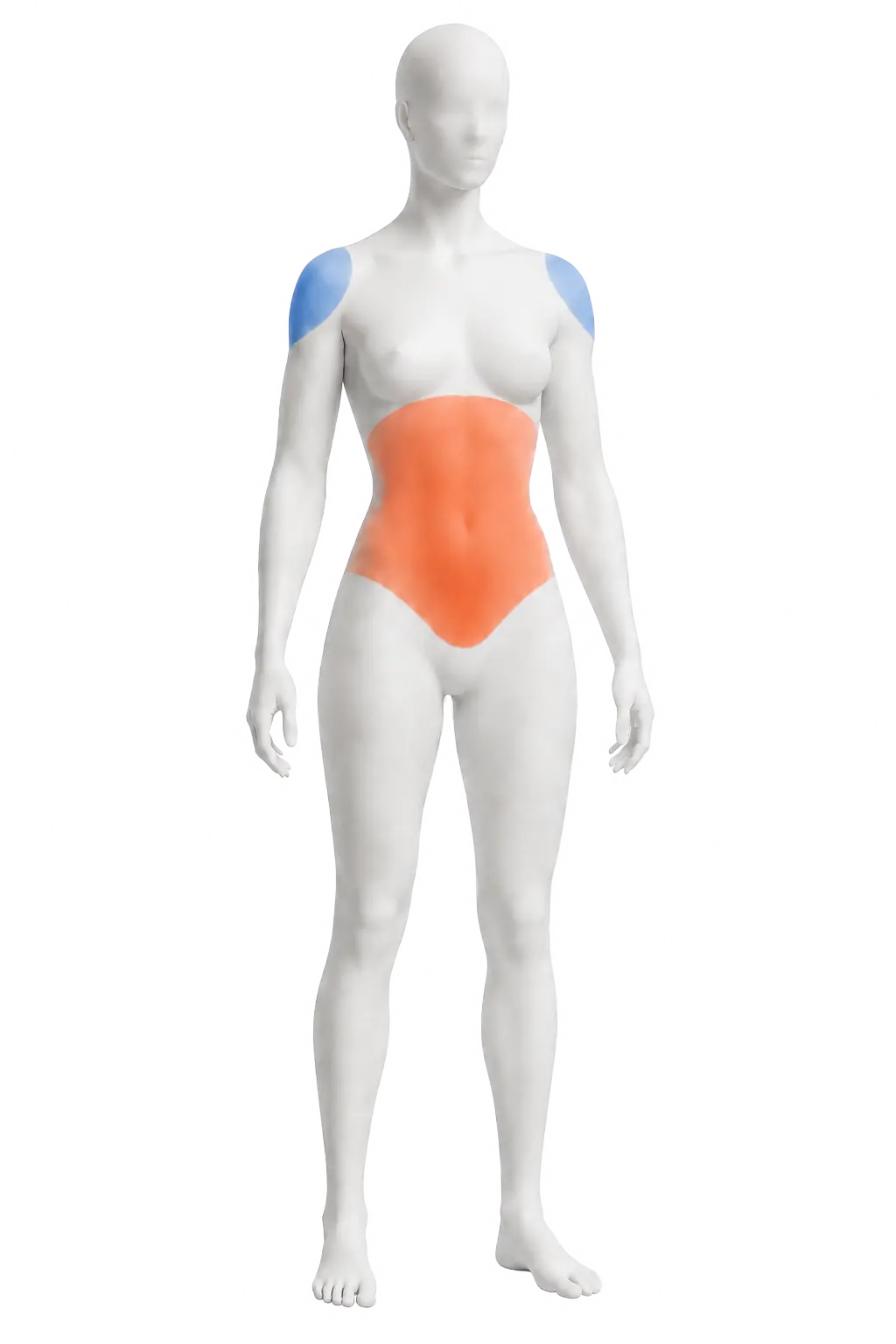
This exercise area provides practical examples for shoulder, back and core training. Shoulder-focused movement and connected back & core movement are presented as two exercise areas, while the examples remain movement tasks rather than individual treatment programmes.
Highlighted areas indicate the main movement emphasis and are not intended to represent isolated anatomical muscle groups.
01 — MOVEMENT AREAS
From shoulder control to whole-body movement.
Shoulder-focused movement can be developed with relatively limited trunk contribution. Once the trunk becomes an active part of the movement, the back and core work together rather than as isolated systems.
The categories therefore indicate the main training emphasis. A PlyoDyne® movement can progressively involve the shoulder, trunk, pelvis, hips and legs as direction, range, speed, support, body position and inertia are changed.
01 — SHOULDER
Shoulder exercises
Explore shoulder movements involving mobility, stability, coordination and controlled loading. Shoulder-focused movement can be developed with relatively limited trunk contribution, particularly during one-handed foundation work.
Explore coordinated trunk movement involving stability, rotation, weight transfer and whole-body control. As the trunk contributes more, back and core involvement increasingly overlaps with the pelvis, hips and legs.
Most exercise descriptions focus mainly on what movement to perform. With PlyoDyne®, another question becomes important:
How should the movement behave?
A defining characteristic of PlyoDyne® is handle travel along the shaft. The handle changes position while the shaft can also tilt around its fixed flexible joint. This creates a movement task in which the user continuously coordinates the handle, shaft and body.
The same basic movement can change considerably when variables such as direction, range, speed, inertia, support and body position are changed.
DirectionWhere the movement travelsRangeHow far it developsSpeedHow quickly it changesInertiaMechanical demandSupportHow movement is constrainedBody positionHow the body contributes
03 — PROFESSIONAL GUIDANCE
Exercise, pain and professional guidance.
Pain can influence how a person moves, loads the body and responds to exercise.
If you experience shoulder pain, back pain, an injury or have been diagnosed with a condition such as frozen shoulder, discuss exercise and movement training with a qualified healthcare professional before starting or changing a programme.
PlyoDyne® does not diagnose or treat pain or medical conditions. It provides a configurable environment for controlled movement training. A qualified professional can determine whether this type of training is appropriate for an individual situation.