One-handed control
Learn meaningful handle travel, comfortable range, shaft control, smooth reversal, balance and stability.
Every new user starts here.


SHOULDER EXERCISES
Shoulder exercises can be used to explore and develop different aspects of movement, including mobility, coordination, stability, power, speed and endurance.
Rather than treating an exercise as one fixed movement, iQQuip® approaches shoulder training as a configurable movement task. Direction, range, speed, support, body position and inertia can influence how the shoulder, shoulder girdle and upper body work together.
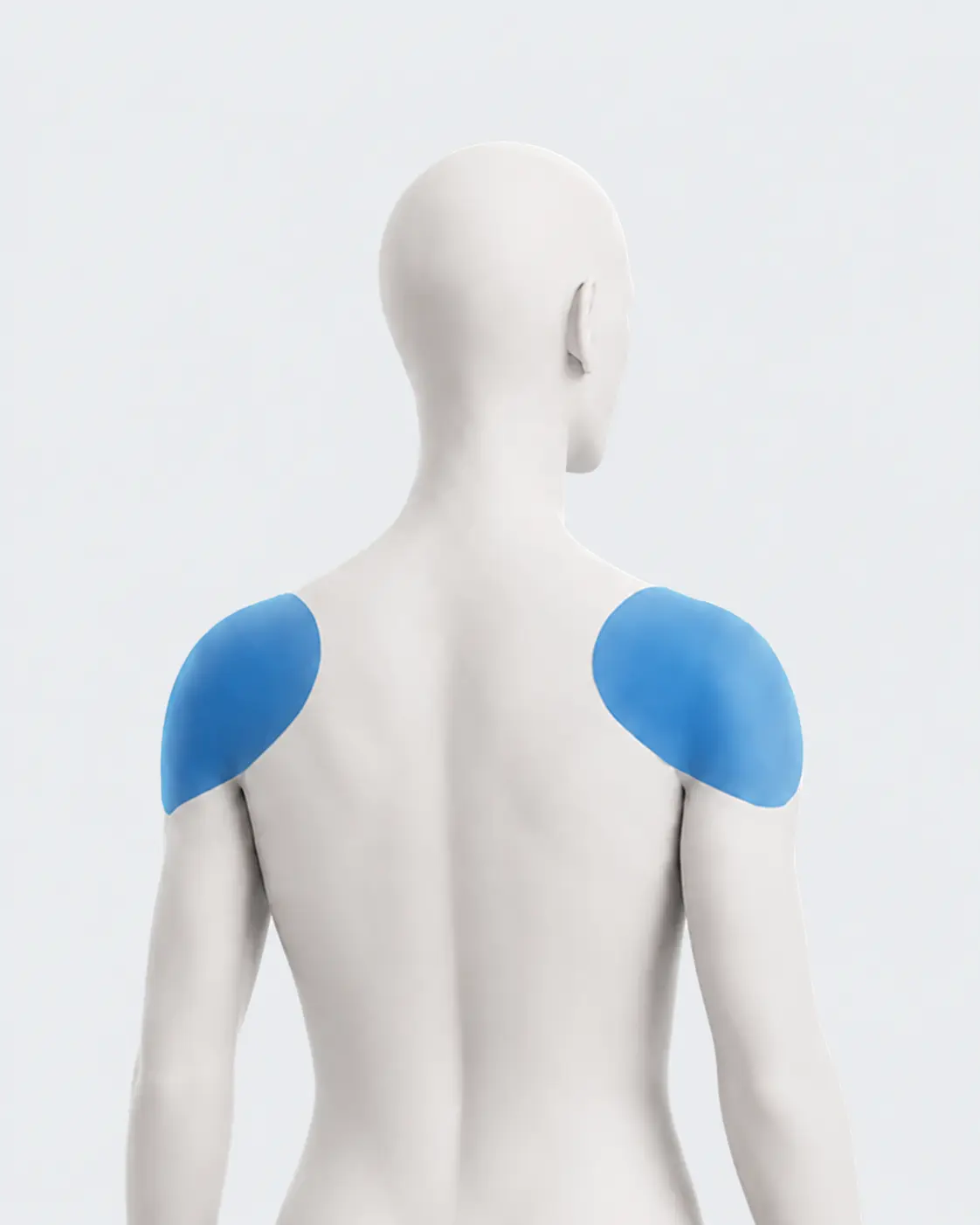
01 — SHOULDER MOVEMENT
Arm movement is not produced by the shoulder joint alone. The shoulder girdle and trunk also contribute to how the arm is positioned and controlled.
Shoulder exercises can therefore be considered not only in terms of range of movement, but also in terms of coordination, stability, timing and interaction with the rest of the body.
02 — THE PLYODYNE® DIFFERENCE
A defining characteristic of PlyoDyne® movement is that the handle travels along the shaft.
As the handle changes position, the shaft can also tilt around its fixed flexible joint. The user therefore coordinates the position of the handle, the angle of the shaft and the movement of the body at the same time.
The movement task can be changed by varying direction, range, speed, inertia, support and body position.
Handle travel remains fundamental even when direction, speed, range or body involvement changes.
03 — PROGRESSION
Every new user starts with one-handed foundation work. Larger shaft tilt, diagonal paths, trunk contribution, speed and inertia are introduced progressively. Two-handed work is advanced and follows only after sufficient one-handed stability and control have been established.
Progress by changing one or more movement variables only after the current movement can be performed with control.
Learn meaningful handle travel, comfortable range, shaft control, smooth reversal, balance and stability.
Every new user starts here.Add larger shaft tilt, diagonal movement, trunk involvement, controlled weight transfer and greater movement range.
Add higher speed, faster reversal, continuous cycles, greater whole-body contribution and increased inertia where appropriate.
Speed must never cause the handle to stop travelling along the shaft.Only after sufficient one-handed stability and control. Two-handed movement increases demands on balance, whole-body stability, core and trunk coordination, hips and legs.
04 — HAND USE
PlyoDyne® exercises can be performed one-handed or two-handed. One-handed execution establishes control of the travelling handle, balance and familiarity with the movement system. Two-handed execution is introduced only after sufficient one-handed control and stability have been developed.

Use one hand to control the travelling handle. One-handed execution allows the arm to move more independently and is used throughout the foundation, coordinated and dynamic progression.
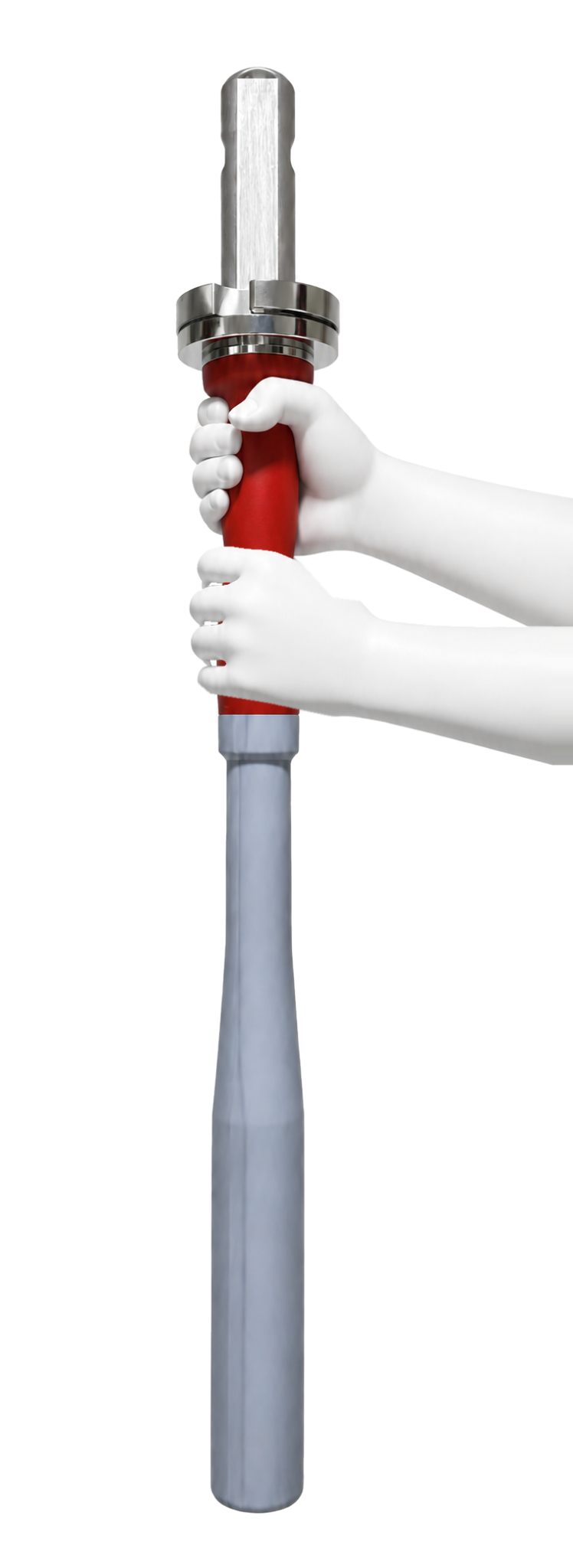
Place both hands securely around the handle. With both hands connected to the same handle, independent arm movement is reduced and the movement requires greater coordination through the whole body.
05 — ONE-HANDED STARTING POSITION
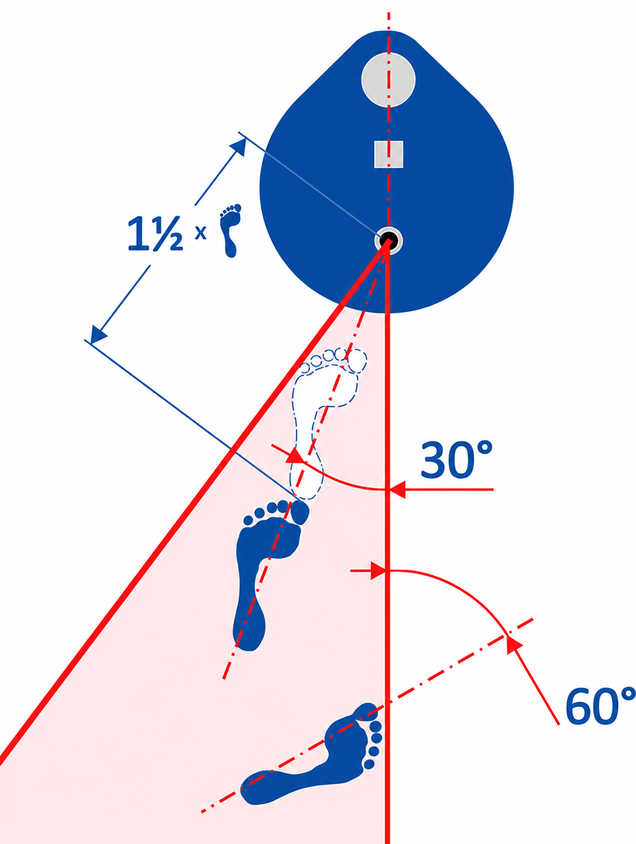
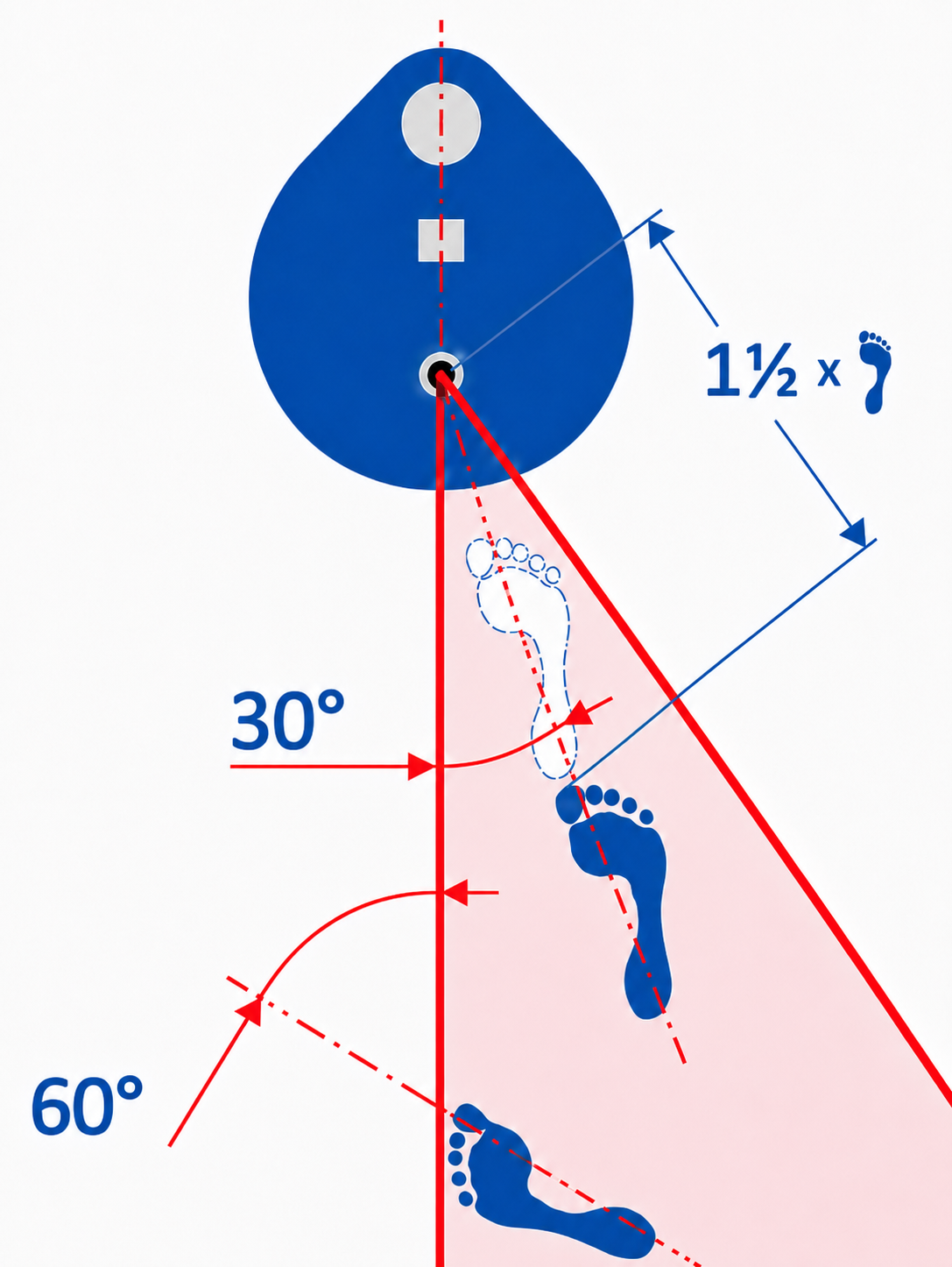
Use this starting foot position for all one-handed exercises unless an exercise specifically states otherwise.
The right- and left-handed starting positions are mirrored. Begin roughly in the position shown and adjust your stance slightly if needed to remain comfortable and balanced.
Movement direction: For right-handed execution, the shaft always passes the head on the right. For left-handed execution, mirror the movement so that the shaft always passes the head on the left.
The feet stay in the established starting positions during the one-handed exercises described here, while pressure and weight distribution through the feet can change naturally with the movement.
06 — EXECUTION
Both executions begin with controlled movement. The movement pattern remains the same; the way it is progressed reflects the objective.
Begin without additional load. Once continuous handle travel, balance and control are established, progression can include repetitions and sets, range, speed, active push/pull, acceleration and deceleration, additional load, power and increasingly dynamic reversals.
M execution is performed without added weight. Progression can include repetitions and sets, comfortable range, coordination, rhythm, speed, active push/pull, acceleration and deceleration, faster controlled reversals and eventually power where appropriate.
07 — DYNAMIC MOVEMENT
As speed increases, the handle can increasingly be pushed and pulled actively. The user can accelerate, decelerate and redirect the travelling handle while the whole body contributes to generating and absorbing the movement.
The upward travel phase reaches its outer limit and changes into travelling down. Incoming speed can be actively decelerated before the movement is redirected.
The downward travel phase reaches its outer limit and changes into travelling up. The body can absorb and redirect the movement into the next cycle.
As speed and power increase, the travelling-up end point, the travelling-down end point, or both can develop a plyometric character. The incoming movement is absorbed and redirected rapidly rather than brought to a hard stop, while continuous handle travel along the shaft is maintained.
At advanced levels, the support handles can be used actively rather than only for stability. Greater upper-body tension and stronger contraction/expansion patterns can enable more forceful push/pull actions, acceleration, deceleration, redirection, speed and power. This is particularly relevant to advanced S execution.
08 — MOVEMENT EXAMPLES
The examples progress from controlled one-handed travel towards more coordinated and dynamic execution. The short names identify the exercise; the line beneath explains the movement emphasis.
When first using PlyoDyne®, the handle may feel as if it moves by itself or pulls unexpectedly. This is a normal response to the combined movement and inertia. Begin slowly and maintain control; the sensation usually becomes familiar after a few sessions.
Begin without additional load. Once the movement is well controlled, progress through repetitions and sets, greater range and speed; later progression can introduce additional load and higher performance demands.
M execution is performed without added weight. Progress through repetitions and sets, comfortable range, coordination and increasingly fluent controlled movement.
Begin without additional load. Progress through repetitions and sets, increasing comfortable range, speed and movement demand. Additional load and higher acceleration/deceleration can be introduced later once control is established.
M execution is performed without added weight. Progress through repetitions and sets, comfortable range, coordination and increasingly fluent diagonal movement. Speed can increase progressively while movement quality remains the priority.
Begin without additional load. Progress through repetitions and sets, greater comfortable range, speed and increasingly active acceleration/deceleration. Additional load and higher performance demand can be introduced once control is established.
M execution is performed without added weight. Progress through repetitions and sets, comfortable range, coordination and increasing movement fluency. Range should be developed as fully as is comfortably available, with speed introduced progressively.
Begin without additional load. Progress through repetitions and sets, range, speed, increasingly active push/pull, acceleration/deceleration and faster reversals. Additional load, greater power and advanced support-handle use can follow. At advanced levels, either or both reversal points may develop a plyometric character.
M execution is performed without added weight. Progress through repetitions and sets, range, rhythm, speed, active push/pull and increasingly controlled acceleration/deceleration. Faster reversals and eventually power can be introduced where appropriate.
09 — PROFESSIONAL GUIDANCE
Shoulder pain can have many different causes and can influence how a person moves, loads the arm and responds to exercise.
If you experience shoulder pain, have an injury or have been diagnosed with a shoulder condition such as frozen shoulder, discuss exercise and movement training with a qualified healthcare professional before starting or changing a programme.
PlyoDyne® does not diagnose or treat shoulder pain or medical conditions. It provides a configurable environment for controlled movement training. A qualified professional can determine whether this type of training is appropriate for an individual situation.
10 — FOR PROFESSIONALS
Physiotherapists, rehabilitation professionals and other qualified movement specialists can use PlyoDyne® to configure movement variables such as direction, range, speed, support, body position and inertia according to the individual objective and situation.
Explore professional applications